
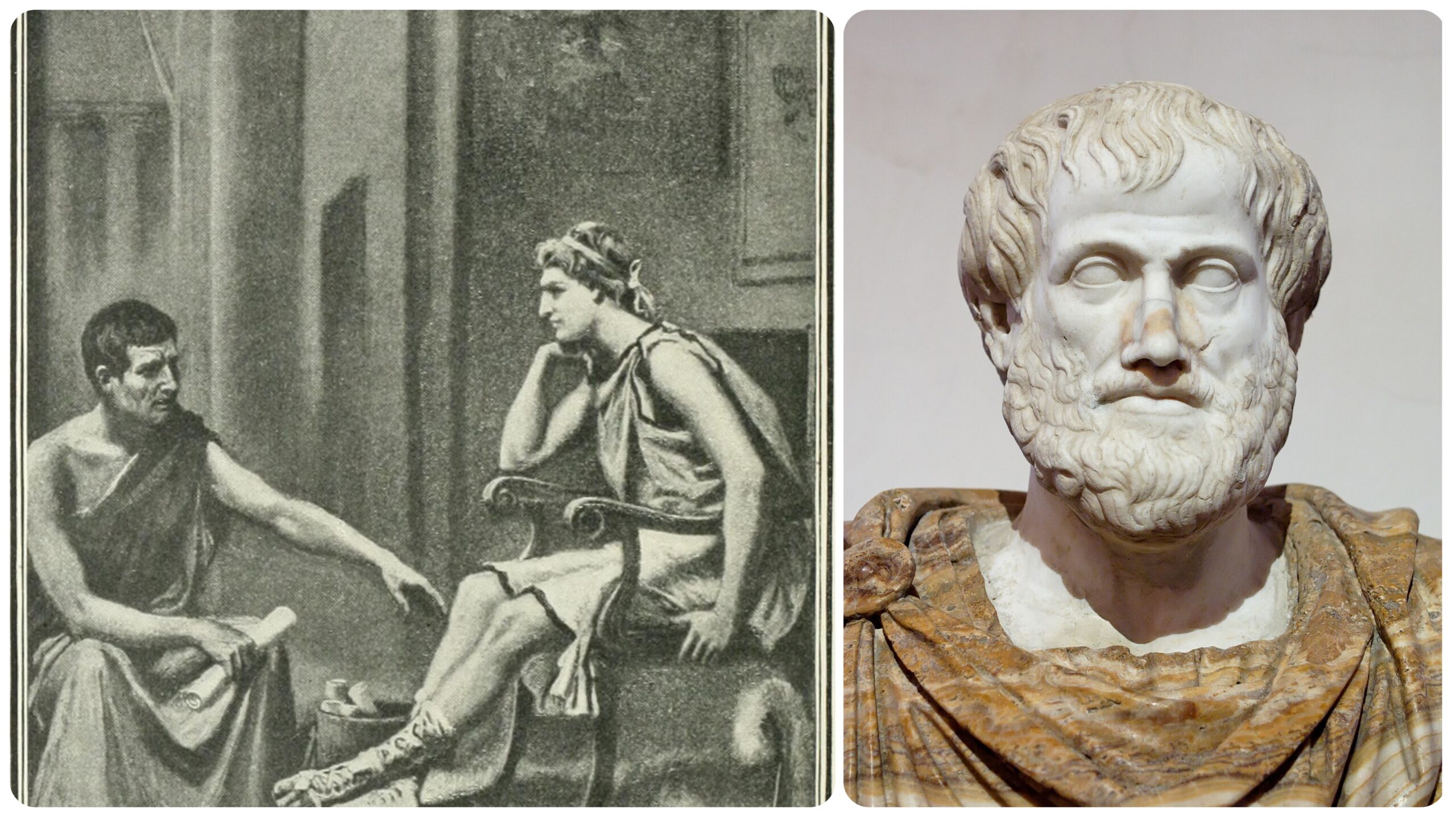
After Plato, the next giant in the history of philosophy is Aristotle, the thinker who transformed philosophy into a practical guide for life, ethics, politics, science, and logic. Born in 384 BCE in Stagira, Aristotle studied for nearly twenty years in Plato’s Academy before developing a philosophy that focused less on ideal forms and more on the real world, human behavior, and rational observation. His influence on philosophy, science, and education remains unmatched. 
Virtue Ethics: Character Over Rules
Aristotle’s most influential contribution is his virtue ethics, explained in his Nicomachean Ethics. Instead of asking only “What action is right?”, Aristotle asked a deeper question: “What kind of person should one become?” For him, ethics was about shaping character through habit, discipline, and wise choices. 
He argued that the good life is achieved through eudaimonia, often translated as flourishing, well-being, or true happiness. This is not temporary pleasure, but a life of excellence guided by reason and moral virtue. 
The Golden Mean: Balance as Moral Wisdom
Aristotle famously taught that virtue lies in the Golden Mean, the balanced point between two extremes. Every virtue stands between deficiency and excess.
For example:
• Courage lies between cowardice and recklessness
• Generosity lies between stinginess and wastefulness
• Confidence lies between insecurity and arrogance
This idea made morality a matter of practical balance and judgment, not rigid rules. Courage is good, but too little becomes fear and too much becomes rashness. 
Logic and the Science of Reasoning
Aristotle was also the father of formal logic. His work on syllogisms shaped the foundations of deductive reasoning for more than two thousand years.
A classic Aristotelian example:
• All humans are mortal
• Socrates is human
• Therefore, Socrates is mortal
This structure became the basis of philosophical argument, scientific proof, and rational debate in later centuries. 
Politics, Knowledge, and Human Nature
Aristotle believed that humans are naturally social and political beings. His famous idea that “man is by nature a political animal” shaped political philosophy from ancient Greece to modern democracy. He linked ethics with civic life, arguing that a just society helps people develop virtue and wisdom. 
Why Aristotle Still Matters Today
Aristotle remains deeply relevant because his philosophy speaks directly to everyday life:
• building strong character
• practicing moderation
• making wise decisions
• using logic in public debate
• seeking long-term flourishing over short-term pleasure
Modern psychology, leadership studies, ethics, and education still draw heavily from his ideas.
Final Takeaway
Aristotle taught that a good life is built through habits, balance, and reason. Rather than chasing instant pleasure or abstract perfection, he urged humanity to cultivate virtues that lead to lasting flourishing.
In the modern world, his message remains timeless: we become what we repeatedly do.