
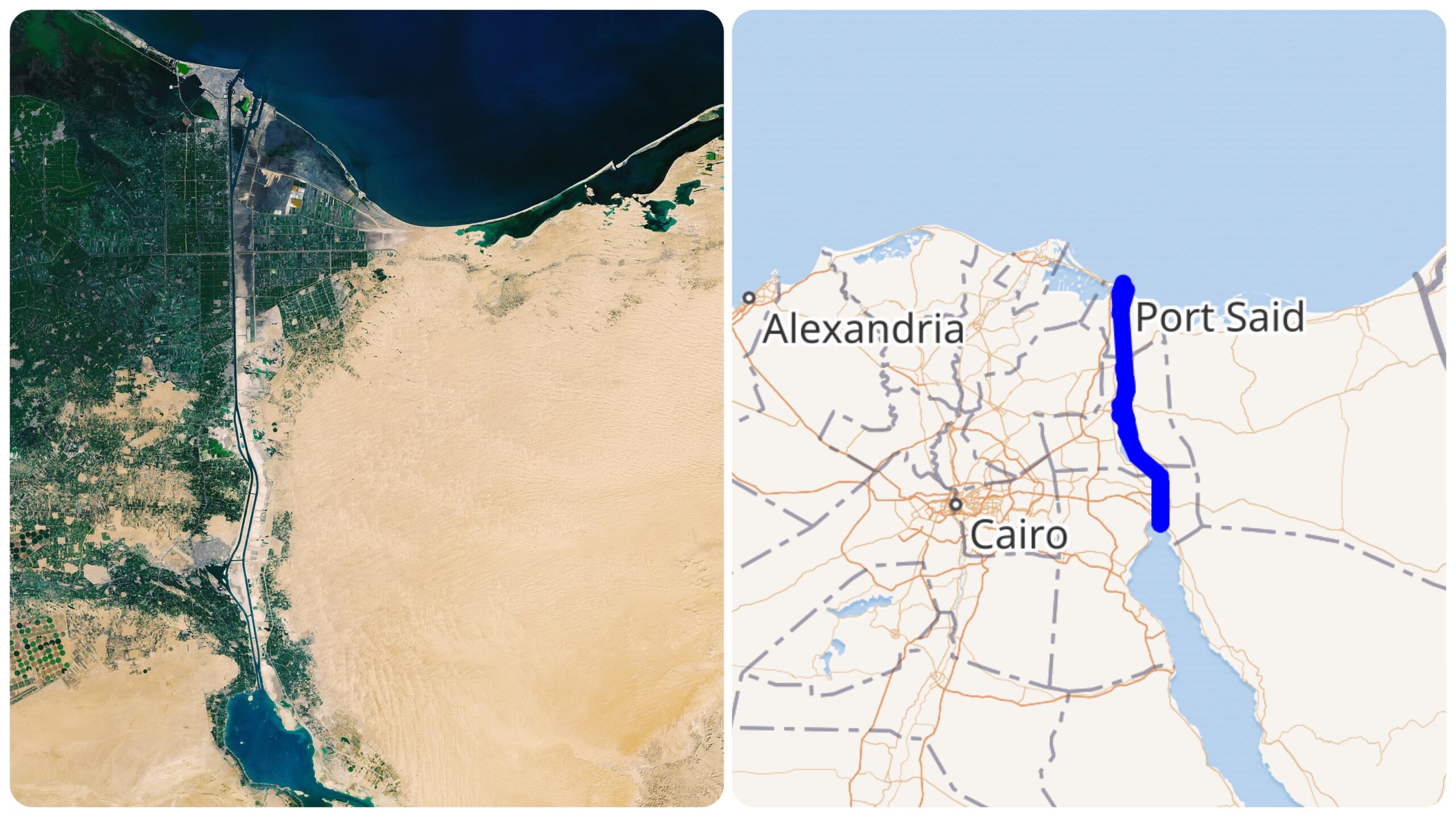
The Suez Canal is one of the most important artificial waterways in the world. Located in northeastern Egypt, the canal connects the Mediterranean Sea with the Red Sea, creating a direct maritime route between Europe and Asia. Opened in 1869, the canal transformed international trade by allowing ships to avoid the long and dangerous journey around the southern tip of Africa.
Stretching approximately 193 kilometers, the Suez Canal is considered one of the busiest shipping lanes on Earth. Thousands of cargo vessels, oil tankers, and container ships pass through it every year carrying goods between major global markets. Products ranging from electronics and automobiles to oil and natural gas rely on this route for faster transportation.
One of the canal’s greatest advantages is the reduction in travel distance and time. Before the canal existed, ships traveling between Europe and Asia had to sail around the Cape of Good Hope in South Africa, adding thousands of extra kilometers to their journey. The Suez Canal significantly shortened this route, helping reduce fuel costs and improving the efficiency of global trade networks.
The canal also holds immense geopolitical importance. Because it controls a major international trade route, the region has often been at the center of political and military tensions. Control over the canal has historically influenced global economics and international relations. Egypt earns billions of dollars annually through transit fees paid by ships using the canal, making it one of the country’s major sources of revenue.
In recent years, the importance of the canal became even more visible during disruptions to global shipping. In 2021, the massive container ship Ever Given became stuck in the canal, blocking traffic for several days and affecting international supply chains. The incident highlighted how heavily the world depends on this narrow waterway for uninterrupted trade.
Today, the Suez Canal remains a critical artery of the global economy. As international trade continues to grow, the canal’s strategic value for shipping, energy transportation, and global commerce is expected to remain essential for decades to come.