
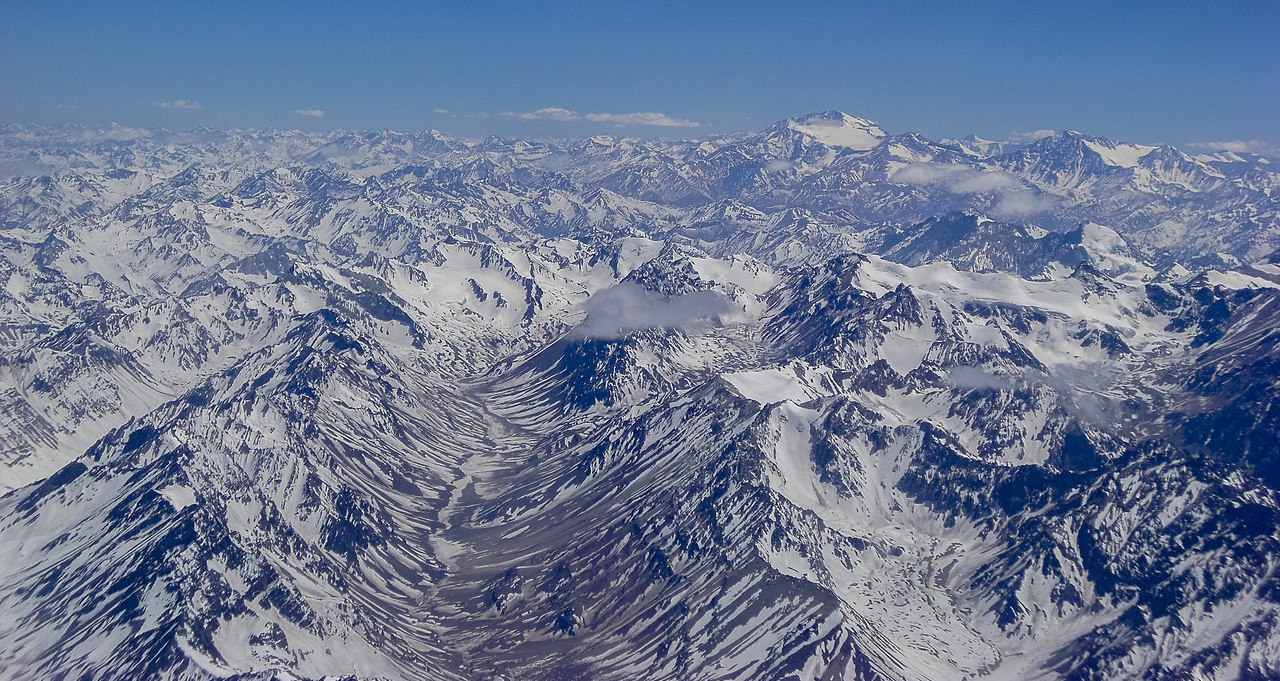
The Andes Mountains form the longest continental mountain range in the world and stretch along the western edge of South America for more than 7,000 kilometers. Passing through countries including Venezuela, Colombia, Ecuador, Peru, Bolivia, Chile, and Argentina, the Andes have played a major role in shaping the continent’s climate, culture, economy, and history for thousands of years.
The mountain range was formed due to the movement of tectonic plates beneath the Earth’s surface. The Nazca Plate continues to slide beneath the South American Plate, creating earthquakes, volcanic activity, and towering peaks across the region. Some of the world’s highest mountains outside Asia are found in the Andes, including Aconcagua in Argentina, which rises to nearly 6,961 meters above sea level.
The Andes strongly influence South America’s climate patterns. The mountains act as a natural barrier that affects rainfall and wind movement across the continent. On the western side, the Andes contribute to the dry conditions of the Atacama Desert in Chile, one of the driest places on Earth. Meanwhile, the eastern slopes help create rich ecosystems and river systems connected to the Amazon Basin.
The Andes were also central to the rise of ancient civilizations, especially the Inca Empire. The Incas built roads, terraces, temples, and cities high in the mountains, adapting remarkably to difficult terrain. Machu Picchu remains one of the most famous archaeological sites in the world and reflects the engineering skill of the Inca civilization.
Today, the Andes continue to support millions of people through agriculture, mining, tourism, and hydropower. Crops such as potatoes, quinoa, and maize are commonly grown in high-altitude valleys. The mountains are also rich in minerals including copper, silver, and lithium, making the region economically significant for several South American countries.
Beyond economics and geography, the Andes hold deep cultural importance. Indigenous traditions, languages, and lifestyles remain closely connected to the mountain environment. The Andes are not just a natural feature of South America but a defining force that continues to shape the continent’s identity and development.