
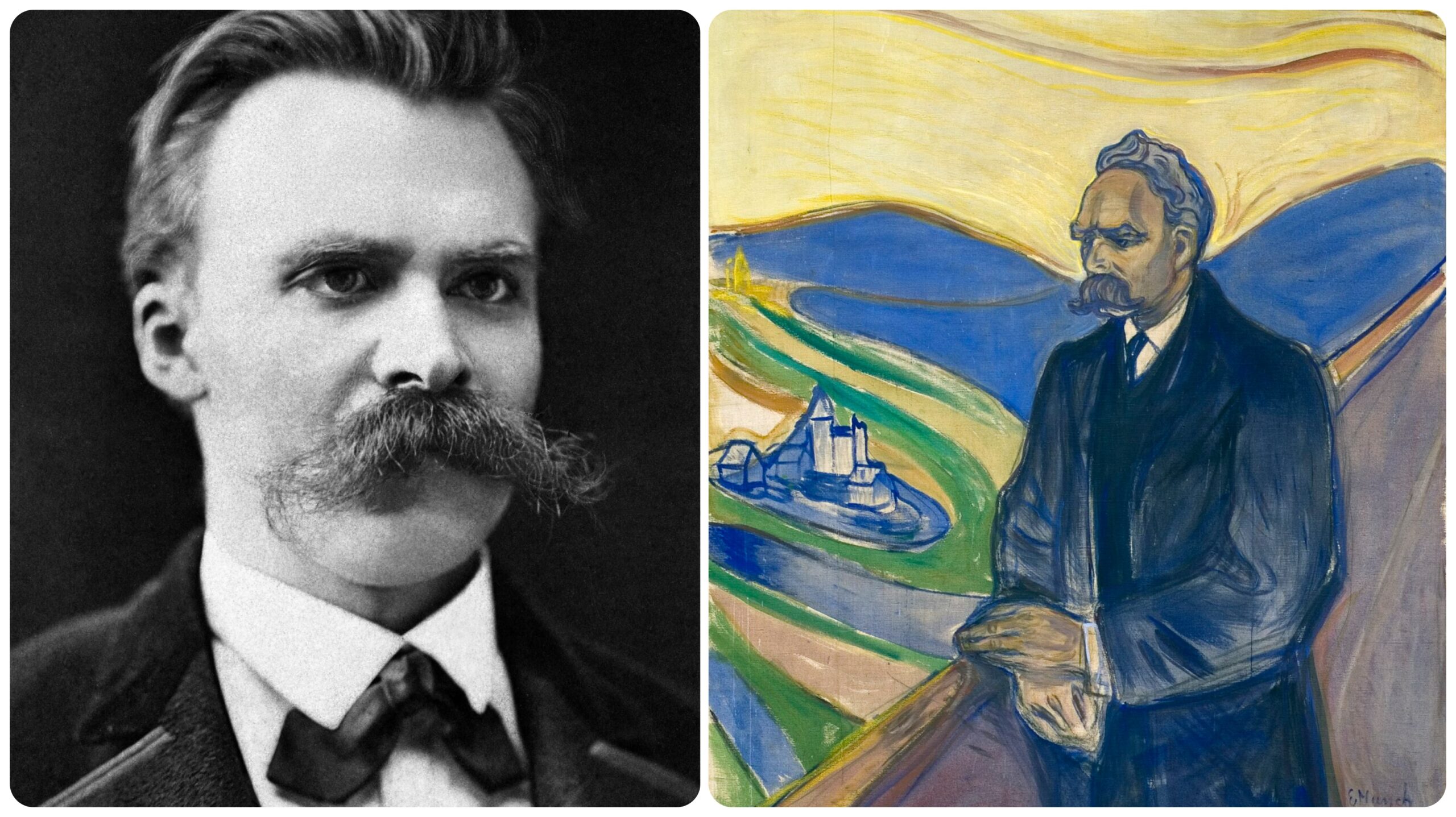
In the landscape of modern philosophy, few thinkers are as provocative and misunderstood as Friedrich Nietzsche. Born in 1844 in Germany, Nietzsche questioned the very foundations of morality, religion, and truth. His work did not aim to comfort society but to awaken it. He challenged humanity to rethink its deepest beliefs and to confront a bold question: Are our values truly our own, or have they been imposed upon us?
The Death of God: A Cultural Turning Point
Nietzsche’s most famous and controversial statement is: “God is dead.” This was not a literal claim about religion, but a philosophical observation about modern society. Nietzsche argued that traditional religious beliefs had lost their power in a world increasingly shaped by science and rationality.
With the decline of these beliefs, humanity faced a crisis. Without a divine foundation, where do values and meaning come from? Nietzsche warned that this vacuum could lead to nihilism, the belief that life has no inherent meaning or value.
The Will to Power: The Drive Behind Human Life
At the center of Nietzsche’s philosophy is the idea of the will to power. He believed that human beings are driven not just by survival or pleasure, but by a deeper urge to grow, overcome challenges, and assert their strength.
This concept redefined human motivation. Instead of passively accepting life, Nietzsche encouraged individuals to actively shape their identity, ambitions, and purpose.
The Übermensch: Creating One’s Own Values
To overcome nihilism, Nietzsche introduced the idea of the Übermensch, often translated as the “Overman” or “Superman.” This is not a superhero figure, but an ideal individual who creates their own values rather than following societal norms.
The Übermensch represents:
* independence of thought
* creative self-expression
* courage to challenge tradition
* the ability to give life meaning through action
Nietzsche believed that humanity’s future depends on individuals who can rise above conformity and define their own moral paths.
Master and Slave Morality
Nietzsche also distinguished between two types of morality:
* Master morality, which values strength, power, and excellence
* Slave morality, which values humility, obedience, and sympathy
He argued that much of modern morality comes from slave morality, which, in his view, suppresses human potential by promoting weakness over strength.
Why Nietzsche Still Matters Today
Nietzsche’s ideas continue to influence modern philosophy, psychology, literature, and cultural criticism. In today’s world, his questions remain urgent:
* Are we living authentically or conforming to expectations?
* Do we create meaning or simply inherit it?
* Can individuals rise above societal pressures to define their own path?
His philosophy speaks directly to an age of identity, freedom, and existential questioning.
Final Takeaway
Friedrich Nietzsche challenged humanity to break free from inherited beliefs and create new values. His philosophy is not easy or comforting, but it is deeply transformative.
His message continues to echo in modern life: become who you are, and give meaning to your own existence.