
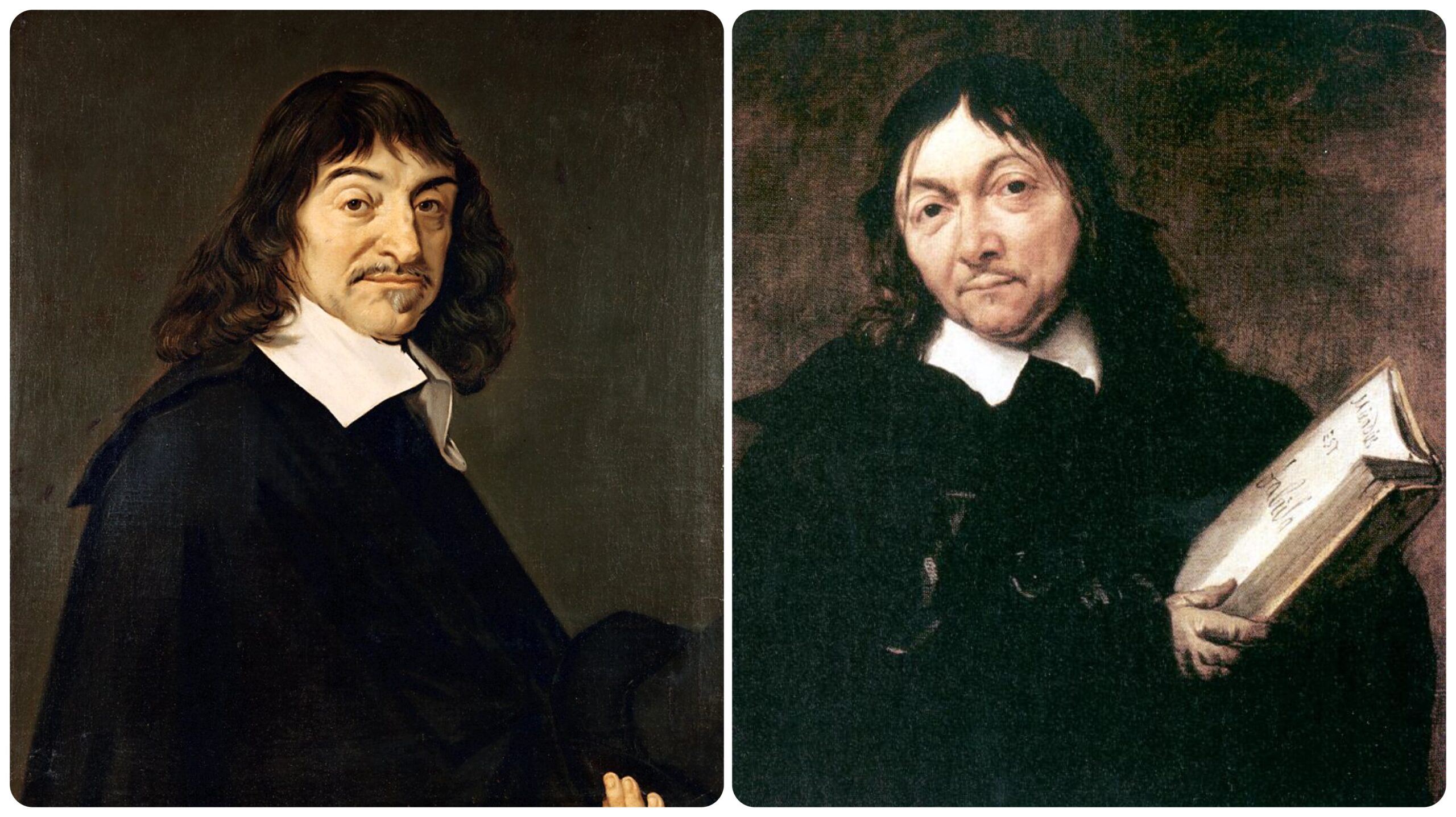
With René Descartes, philosophy entered the modern age. Born in 1596 in France, Descartes transformed intellectual history by asking a revolutionary question: What can we know with absolute certainty? His answer reshaped philosophy, science, mathematics, and modern rational thought. Because of his method of radical doubt and his emphasis on reason, he is widely regarded as the father of modern philosophy. 
The Method of Doubt: Question Everything
Descartes believed that many of our beliefs come from the senses, tradition, or authority, all of which can be mistaken. To find certainty, he proposed a bold method: doubt everything that can possibly be doubted.
Can the senses deceive us? Yes.
Can dreams feel real? Yes.
Can even mathematics be questioned? Temporarily, yes.
By stripping away every uncertain belief, Descartes searched for one truth that could survive total skepticism. This process became known as the Cartesian method of doubt, one of the most influential tools in philosophy. 
“I Think, Therefore I Am”
From this radical doubt emerged the most famous statement in philosophy: “Cogito, ergo sum”, or “I think, therefore I am.”
Descartes realized that even if everything else is false, the very act of doubting proves that a thinking self must exist. If one is thinking, one must exist as the thinker.
This became the first absolutely certain truth in modern philosophy and the foundation of his theory of knowledge. 
Rationalism: Reason Above the Senses
Descartes is one of the central figures of rationalism, the view that reason is the primary source of knowledge. He believed the mind can discover truths more securely than the senses can.
This idea strongly influenced:
• modern science
• mathematics
• epistemology
• logic
• scientific method
His work also contributed to analytic geometry, linking algebra and geometry through the Cartesian coordinate system. 
Mind and Body: Cartesian Dualism
Another major part of Descartes’ philosophy is mind-body dualism. He argued that the mind is a thinking, non-material substance, while the body is physical and extended in space.
This distinction created one of philosophy’s most enduring debates: how do mind and body interact? The modern philosophy of consciousness still wrestles with this Cartesian question. 
Why Descartes Still Matters Today
In today’s world of misinformation, AI, simulations, and virtual reality, Descartes feels strikingly modern. His philosophy teaches us to:
• test assumptions
• seek certainty
• value logical reasoning
• separate appearance from truth
• question inherited beliefs
His influence remains visible in philosophy classrooms, neuroscience, mathematics, and modern debates on consciousness.
Final Takeaway
René Descartes taught humanity that certainty begins with disciplined doubt. By questioning everything, he discovered the indestructible truth of the thinking self and gave modern philosophy its starting point.
His timeless message still guides critical thought today: reason is the path to certainty.