
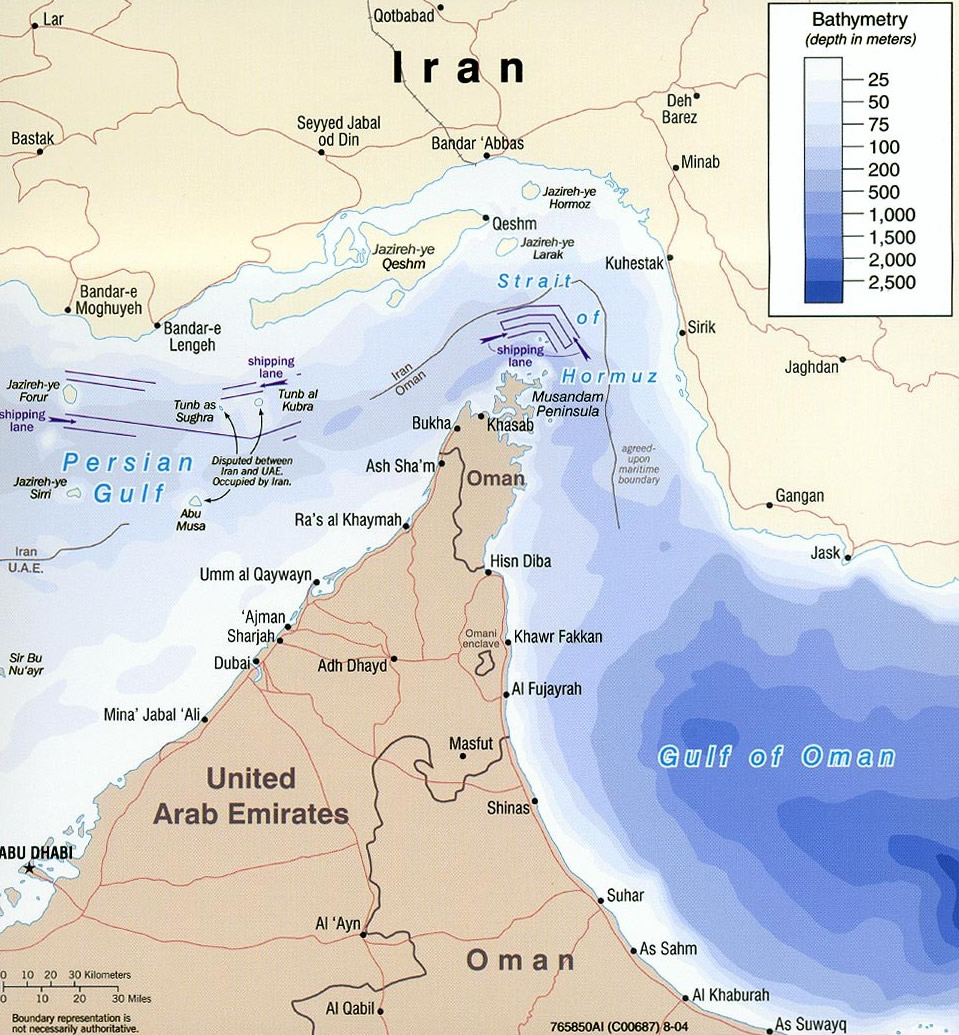
The Strait of Hormuz is one of the most strategically important waterways in the world. Located between Iran to the north and Oman and the United Arab Emirates to the south, this narrow passage connects the Persian Gulf with the Gulf of Oman and ultimately the Arabian Sea. Despite being only about 33 kilometers wide at its narrowest point, the strait plays an outsized role in the global energy system.
Every day, a massive portion of the world’s oil supply passes through this narrow channel. Because of this heavy traffic, the Strait of Hormuz is widely considered the most important oil transit chokepoint on the planet.
A Critical Route for Global Energy
The Persian Gulf region contains some of the largest oil reserves in the world. Countries such as Saudi Arabia, Iraq, Kuwait, Qatar, and the United Arab Emirates export huge quantities of petroleum to international markets. For most of these nations, the Strait of Hormuz is the primary route through which their oil reaches the rest of the world.
Energy analysts estimate that roughly one-fifth of the world’s total oil consumption moves through this passage. Oil tankers carrying crude oil and liquefied natural gas leave ports along the Persian Gulf and must pass through the Strait of Hormuz before reaching global shipping lanes. From there, these energy supplies travel to major importers in Asia, Europe, and North America.
Countries like China, India, Japan, and South Korea rely heavily on oil shipments from the Gulf region, making the stability of this route vital for the global economy.
Geography of a Strategic Chokepoint
What makes the Strait of Hormuz so important is its geography. The navigable shipping lanes for large tankers are actually quite narrow. Ships entering and leaving the Persian Gulf travel through designated lanes that are only a few kilometers wide in each direction. This limited space means that any disruption—whether political tension, military conflict, or maritime accidents—can quickly affect global oil supplies.
The northern coastline of the strait is controlled by Iran, while the southern side belongs largely to Oman. Because of this shared geography, the waterway sits at the center of regional geopolitics.
Global Economic Importance
The global economy is deeply connected to energy transportation. If shipping through the Strait of Hormuz were disrupted, oil prices would likely rise dramatically. Even the possibility of instability in the region often influences global energy markets.
Over the decades, the strait has periodically become a focal point of international attention due to political tensions in the Middle East. Governments and energy companies closely monitor the security of the route because it remains one of the most critical arteries of global trade.
A Lifeline of the Modern Energy System
The Strait of Hormuz demonstrates how geography can shape global economics and politics. A narrow body of water between two coastlines carries energy supplies that power industries, transportation networks, and entire economies across the world.
In an age where energy demand remains high, the importance of this small but vital passage continues to grow. As long as the world depends heavily on petroleum from the Persian Gulf, the Strait of Hormuz will remain one of the most important maritime routes on Earth.
Strait of Hormuz oil route