
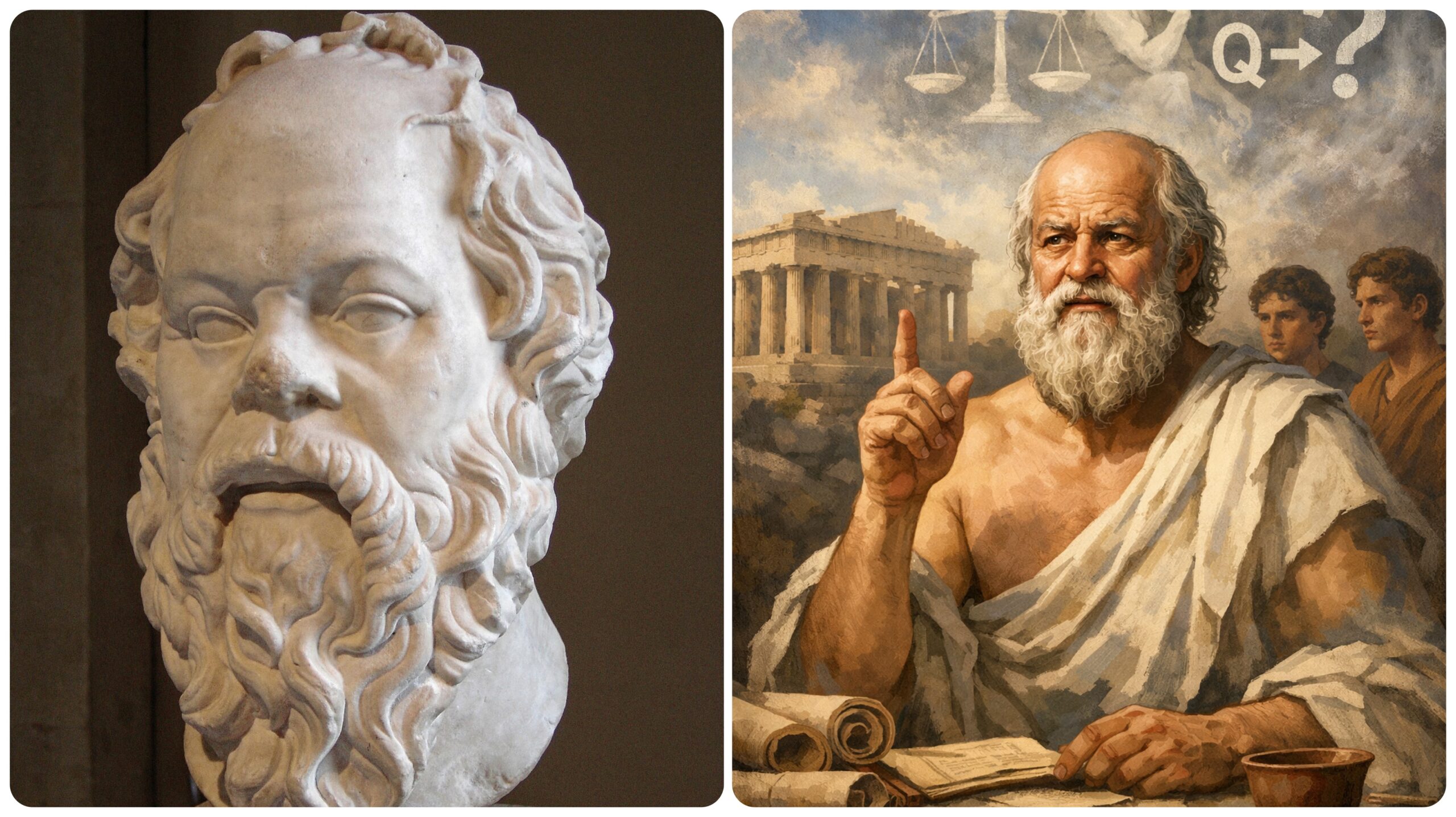
Among the greatest names in human thought, Socrates stands as the philosopher who changed the direction of philosophy forever. Living in ancient Athens during the 5th century BCE, Socrates shifted philosophical inquiry away from the mysteries of nature toward the deeper questions of ethics, virtue, justice, and the meaning of a good life. Though he wrote nothing himself, his ideas survive through the works of his students, especially Plato and Xenophon. 
The Core of Socratic Philosophy
Socrates believed that wisdom begins with recognizing one’s own ignorance. His famous intellectual humility – knowing that one does not truly know – became the foundation of rational inquiry. Rather than giving direct answers, he asked sharp, probing questions that forced people to examine their beliefs. This approach later became known as the Socratic Method, a dialogue – based technique still used in law, education, and philosophy classrooms today. 
At the heart of his philosophy was one timeless principle: “The unexamined life is not worth living.” For Socrates, human beings must constantly test their beliefs, moral choices, and assumptions. A life lived without reflection, he argued, is a life lived blindly. 
Ethics, Virtue, and the Good Life
Unlike earlier thinkers who focused on the cosmos, Socrates turned philosophy toward the human soul and moral character. He asked: What is justice? What is courage? What is virtue? His belief was radical yet simple—virtue is knowledge. If people truly understand what is good, they will naturally act rightly. Wrongdoing, therefore, comes from ignorance rather than evil intent. 
This idea made Socrates one of the earliest and most influential moral philosophers in world history. His thought laid the groundwork for later traditions such as Stoicism, Christian ethics, and Enlightenment rationalism.
Trial, Death, and Moral Courage
In 399 BCE, Socrates was tried in Athens on charges of impiety and corrupting the youth. Rather than abandoning his principles, he defended the philosopher’s duty to question society. He was sentenced to death and drank hemlock poison, accepting the law rather than escaping. His death transformed him into a symbol of intellectual courage and loyalty to truth. 
Why Socrates Still Matters Today
The modern world—filled with misinformation, ideological conflict, and fast opinions—still needs the Socratic spirit. His philosophy teaches us to:
• question assumptions
• seek evidence
• examine moral choices
• value truth over popularity
• live a reflective life
In classrooms, courtrooms, journalism, and democratic debate, Socrates remains alive whenever someone asks, “How do you know that is true?”
Final Takeaway
Socrates did not leave behind books, but he left humanity something greater: the courage to question. His philosophy reminds us that wisdom is not having all the answers—it is having the honesty to keep asking the right questions.