
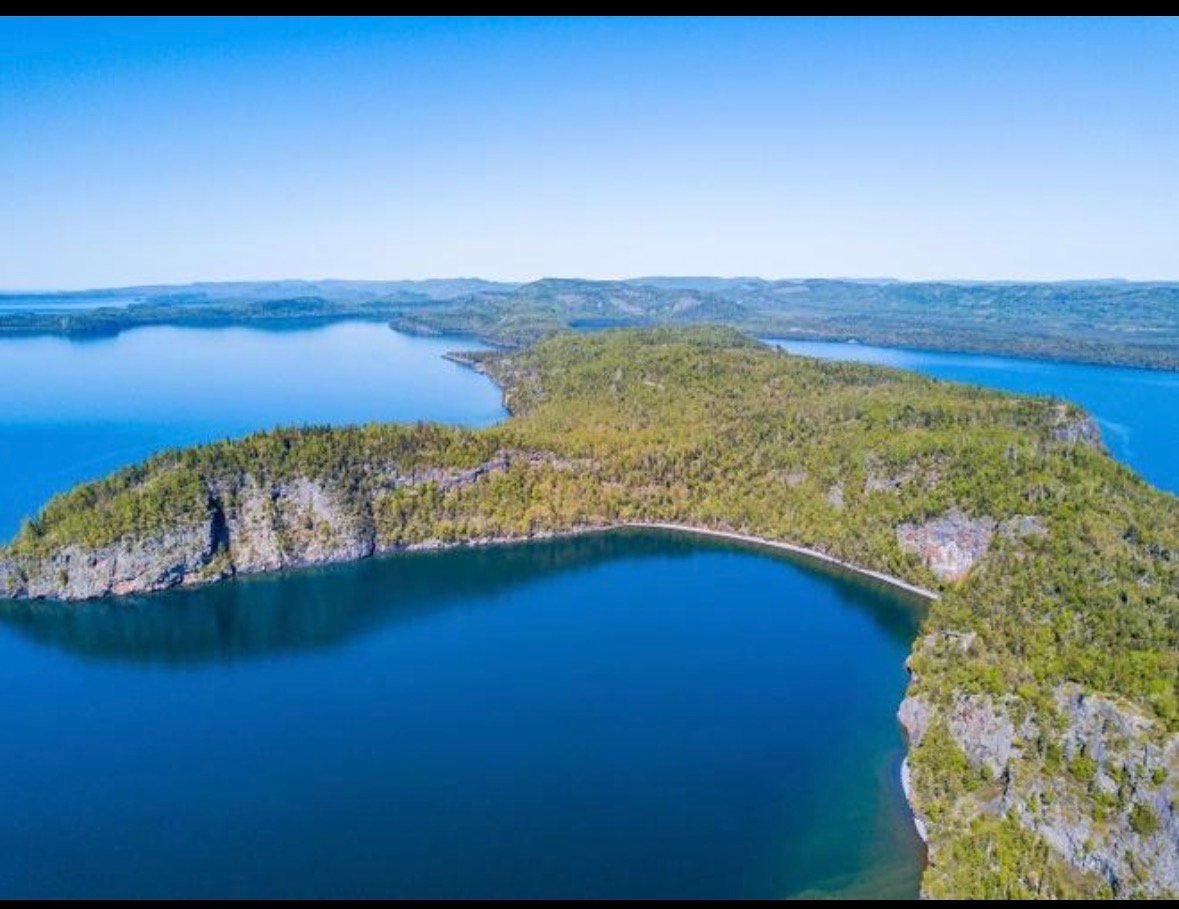
When people think of the world’s largest lakes, they might imagine enormous bodies of water in Russia, Africa or Central Asia. But one of the most remarkable freshwater giants lies along the United States–Canada border.
Lake Superior is the largest freshwater lake in the world by surface area, covering approximately 31,700 square miles (82,100 square kilometres). Its surface is roughly comparable in size to the entire state of South Carolina.
But its size is only the beginning of its extraordinary geographical story.
Where Is Lake Superior Located?
Lake Superior is the northernmost and westernmost of North America’s five Great Lakes. It forms part of the international boundary between the United States and Canada.
Its shores touch three American states:
- Minnesota
- Wisconsin
- Michigan
To the north lies the Canadian province of Ontario.
The lake is approximately 350 miles long and 160 miles wide, making it a defining geographical feature of the Upper Midwest.
A Freshwater Giant With Incredible Depth
Lake Superior is not just enormous in surface area. It is also remarkably deep.
Its average depth is approximately 483 feet, while its deepest point reaches around 1,332 feet.
The lake contains approximately 2,900 cubic miles of water. In fact, it holds enough water to fill all the other Great Lakes combined, with enough remaining to fill three additional Lake Eries.
This extraordinary volume makes Lake Superior the world’s third-largest freshwater lake by volume.
How Much of the World’s Freshwater Does It Hold?
Lake Superior contains approximately 10% of the world’s surface freshwater.
Its enormous freshwater reserve makes it an important natural resource for North America.
Despite its size, the lake is surrounded by extensive forests, rocky coastlines and relatively sparsely populated areas.
Why Is Lake Superior Called Superior?
The name comes from the French expression Lac Supérieur, meaning “Upper Lake.”
Early French explorers used this name because Lake Superior lies above Lake Huron in the Great Lakes system.
Its Indigenous name, Kitchi-gummi, from the Ojibwe language, is commonly translated as “Great Water.”
A Lake That Takes Almost Two Centuries to Renew
One of Lake Superior’s most fascinating characteristics is its water retention time.
The lake takes approximately 191 years to replace its water through natural inflows and outflows.
Water eventually leaves through the St. Marys River, flowing towards Lake Huron.
This exceptionally long replacement period makes protecting the lake from pollution and environmental damage particularly important.
Why Lake Superior Matters
Lake Superior is much more than a geographical landmark. It supports fisheries, wildlife habitats, tourism, shipping and communities on both sides of the international border.
Its coastline features spectacular natural landscapes, including the dramatic cliffs of Pictured Rocks National Lakeshore in Michigan and the rugged shores of Minnesota and Wisconsin.
For travellers, photographers and geography enthusiasts, Lake Superior offers some of the most impressive freshwater landscapes in North America.
The Bottom Line
Lake Superior is a geographical wonder: the largest freshwater lake in the world by surface area, a reservoir containing an extraordinary volume of freshwater, and one of the defining natural features of the United States and Canada.
It is a reminder that some of North America’s greatest natural wonders are not oceans or mountains, but freshwater lakes.