
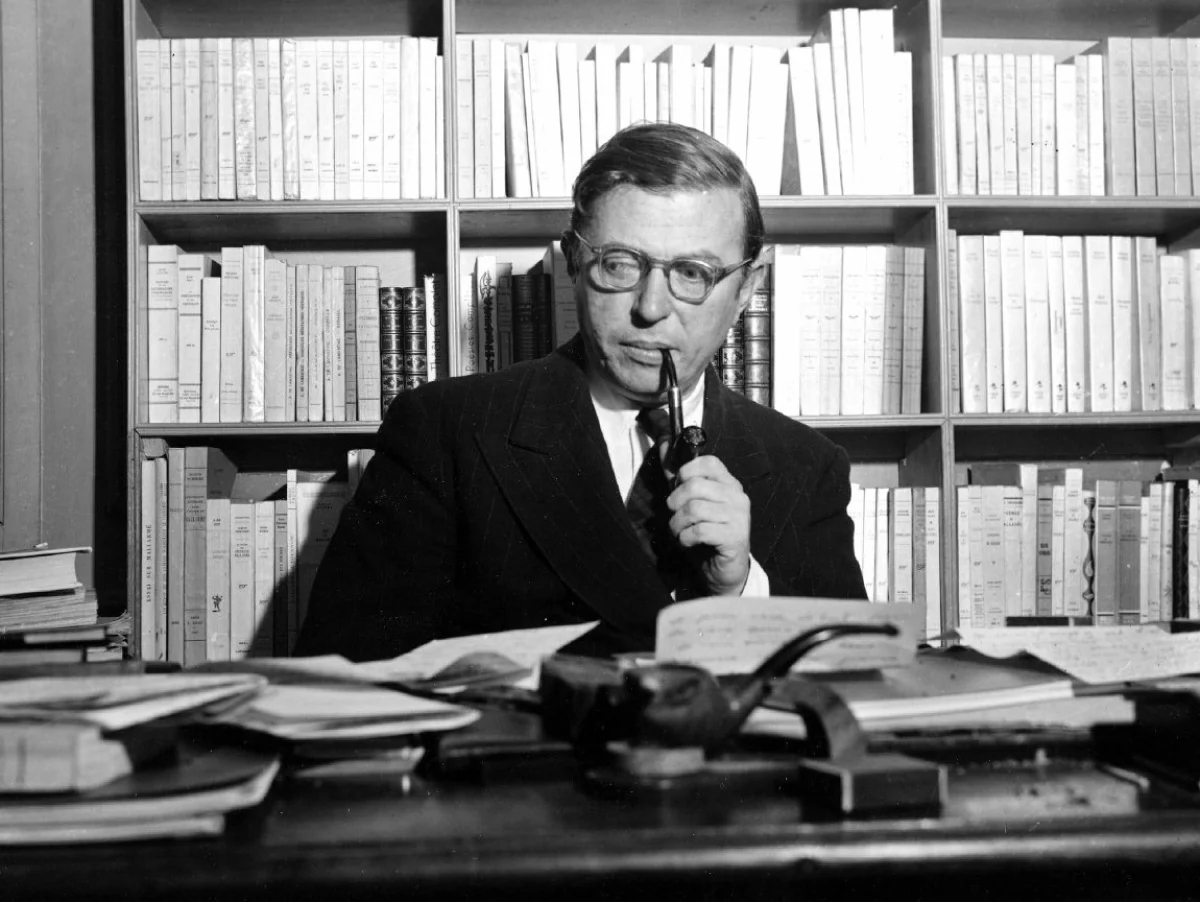
Among the most influential philosophers of the twentieth century, Jean-Paul Sartre transformed modern thought through his philosophy of existentialism. Born in 1905 in France, Sartre explored the meaning of freedom, responsibility, and human existence in a world without predetermined purpose. His philosophy emerged during a century marked by war, political crisis, and social upheaval, making his ideas deeply connected to the anxieties of modern life.
Existentialism: Existence Comes Before Essence
Sartre’s most famous philosophical principle is: “Existence precedes essence.”
By this, Sartre meant that human beings are not born with a fixed nature or predetermined purpose. Unlike tools, which are created for a specific function, people first exist and then define themselves through their actions and choices.
For Sartre:
* there is no fixed human destiny
* individuals create meaning through decisions
* identity is shaped by action, not fate
This idea became the foundation of existentialist philosophy.
Radical Freedom and Responsibility
Sartre believed that human beings are fundamentally free. Even in difficult situations, people still possess the ability to choose how they respond. However, this freedom comes with a heavy burden: complete responsibility.
According to Sartre, people often try to escape this responsibility by blaming society, tradition, or circumstances. He called this self-deception “bad faith.”
Examples of bad faith include:
* pretending one has no choice when choices exist
* blindly conforming to social expectations
* avoiding responsibility for personal actions
For Sartre, authentic living requires accepting freedom honestly, even when it creates anxiety.
Anxiety and the Human Condition
Because there is no predetermined meaning in life, Sartre argued that human beings experience existential anxiety. This anxiety is not simply fear, but the awareness that we alone are responsible for shaping our lives.
Instead of viewing this as hopeless, Sartre believed it could become a source of empowerment. Humans are free to create values, goals, relationships, and purpose through conscious action.
Politics and Social Engagement
Unlike philosophers who remained distant from public life, Sartre was deeply involved in politics and social issues. He wrote about colonialism, inequality, war, and human rights, believing that philosophy should engage directly with society.
His existentialism therefore combined personal freedom with social responsibility.
Why Sartre Still Matters Today
Sartre’s philosophy speaks strongly to modern generations facing questions of identity, pressure, and purpose. In a world shaped by social media, career uncertainty, and cultural expectations, his ideas remain highly relevant:
* individuals must define themselves
* freedom requires responsibility
* authenticity matters more than conformity
* meaning is created through action
His thought continues to influence psychology, literature, political theory, and modern discussions on identity and freedom.
Final Takeaway
Jean-Paul Sartre taught that human beings are free to create themselves through their choices. His existentialism rejects passive living and challenges individuals to take responsibility for the meaning of their own lives.
His message remains powerful today: you are what you choose to become.