
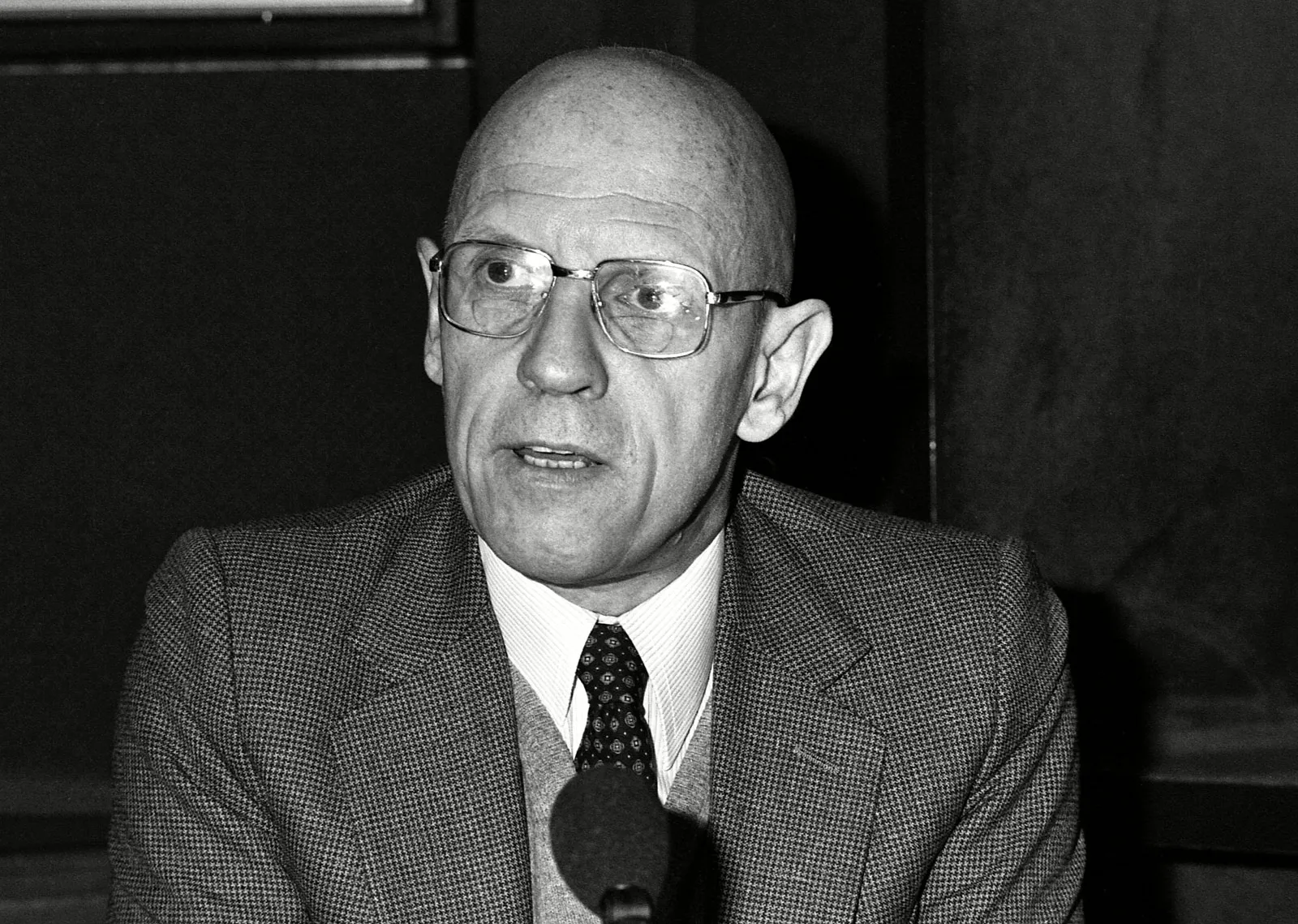
Few twentieth-century philosophers changed the way people think about society as profoundly as Michel Foucault. Born in France in 1926, Foucault challenged traditional ideas about history, knowledge, institutions, and power. Rather than asking who holds power, he explored how power operates through everyday life, influencing the way people think, behave, and even understand themselves.
His groundbreaking work transformed philosophy, sociology, history, political theory, and cultural studies, making him one of the most widely discussed thinkers of the modern era.
Power Is Everywhere
Unlike many earlier philosophers who viewed power as something possessed only by kings, governments, or armies, Foucault argued that power exists throughout society. It operates through institutions, social norms, language, and everyday practices.
According to Foucault, power is present in places such as:
schools
hospitals
prisons
workplaces
families
the media
These institutions do more than enforce rules. They shape how people think, classify behavior, and define what society considers normal or acceptable.
Knowledge and Power Are Connected
One of Foucault’s most influential ideas is that knowledge and power are inseparable.
He argued that those who produce and control knowledge often influence society’s understanding of truth. Scientific theories, legal systems, educational practices, and medical classifications are not created in isolation. They are shaped by historical, social, and political contexts.
This does not mean that all knowledge is false. Rather, Foucault encouraged people to ask:
Who defines what counts as knowledge?
Whose voices are accepted as authoritative?
How do institutions shape what society believes to be true?
These questions continue to influence research across many academic disciplines.
Discipline and Surveillance
In his landmark book Discipline and Punish, Foucault examined how modern societies maintain order. He argued that contemporary power often works through discipline and surveillance rather than open force.
Using the concept of the Panopticon, a prison design proposed by Jeremy Bentham, Foucault explained how people may regulate their own behavior when they believe they could be observed, even if no one is actually watching.
Today, this idea is frequently discussed in relation to:
digital surveillance
workplace monitoring
public security
online behavior
data collection
The History of Ideas
Foucault believed that concepts such as madness, crime, sexuality, and illness have changed significantly across history. Instead of treating these categories as fixed, he examined how societies define and redefine them over time.
His historical approach showed that many accepted ideas are shaped by cultural and institutional changes rather than remaining constant across every era.
Why Foucault Still Matters Today
Foucault’s philosophy remains highly relevant in discussions about:
privacy and digital technology
artificial intelligence
media influence
education
healthcare
criminal justice
freedom and government authority
His work encourages people to think critically about the systems that shape everyday life.
Final Takeaway
Michel Foucault taught that power is not simply imposed from above but operates through the structures, institutions, and ideas that organize society. His philosophy invites us to question how knowledge is produced, how authority functions, and how social norms influence our lives.
His enduring message is clear: to understand society, we must examine not only who holds power, but also how power quietly shapes the way we think, act, and live.